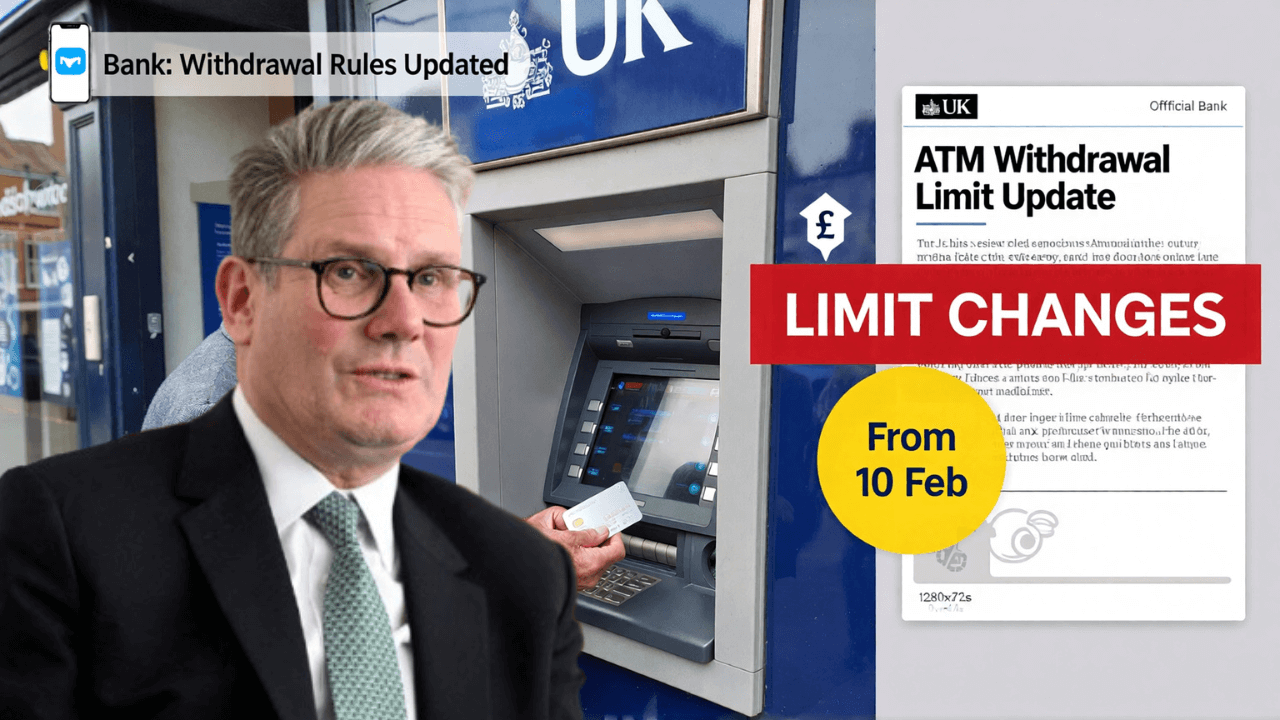
From 10 February, UK banks are introducing updated withdrawal procedures that will affect some customers aged over 67. The announcement has naturally sparked concern among pensioners, particularly those who prefer to manage their money through cash withdrawals at branches or ATMs.
Headlines about “new limits” can sound worrying. Many older customers immediately ask the same questions: Are banks restricting access to my money? Will I be stopped from withdrawing large amounts? Is this connected to pension payments?
The reality is more measured. The updated approach focuses on fraud prevention, customer safeguarding and additional verification for unusually large withdrawals. For most over‑67s, everyday banking will continue exactly as before.
Here is a clear, detailed explanation of what is changing and what it means in practice.
Why Banks Are Updating Withdrawal Rules
Financial fraud remains one of the fastest‑growing crimes in the UK. Older people are often targeted by scammers posing as bank staff, government officials or even family members.
In many cases, fraud involves persuading someone to withdraw large sums of cash urgently. Once the money leaves the bank, it can be very difficult to recover.
Banks are under increasing regulatory pressure to protect vulnerable customers. The updated withdrawal measures are part of that effort.
The aim is prevention, not restriction.
Do the New Limits Apply to Everyone Over 67
There is no nationwide law that automatically caps withdrawals for everyone aged 67 or above.
Instead, individual banks are strengthening internal safeguards for customers considered potentially vulnerable. Age can be one factor in that assessment, but it is not the only one.
Most routine ATM withdrawals and normal branch transactions will not be affected.
The changes mainly apply to unusually large or suspicious transactions.
What Is Actually Changing From 10 February
From 10 February, banks will introduce clearer policies in three key areas.
First, enhanced questioning for large in‑branch cash withdrawals. If an older customer requests a significant sum, staff may ask about the purpose of the withdrawal to ensure it is not linked to a scam.
Second, stronger automated monitoring of ATM and online transfers that fall outside usual spending patterns.
Third, improved internal notes and safeguarding records when fraud risk is suspected.
These are protective checks, not blanket bans.
ATM Withdrawal Limits Explained
ATM limits are set by individual banks and account types. They are not controlled centrally by the government.
There is no confirmed universal reduction in daily ATM withdrawal limits specifically for over‑67s.
However, if a customer attempts to withdraw significantly more than usual, the system may temporarily block the transaction pending verification.
This type of monitoring applies to many age groups, not just pensioners.
In‑Branch Cash Requests
Branch staff are receiving updated training to recognise signs of financial coercion or fraud.
If an over‑67 customer asks to withdraw a large sum, staff may politely ask additional questions. This could include:
Whether someone has asked them to withdraw the money
Whether they feel under pressure
What the money will be used for
While some customers may find this intrusive, it is designed to prevent life‑changing losses.
Once staff are satisfied the request is genuine, funds are released.
Online and Telephone Banking Checks
Banks are also improving online fraud detection systems.
If a large transfer is attempted to a new payee, customers may receive additional verification steps, such as one‑time passcodes or confirmation calls.
Older customers who are less familiar with digital banking may notice more on‑screen warnings.
These alerts are meant to interrupt potential scam activity.
Why Over‑67s Are Mentioned Specifically
People over State Pension age are statistically more likely to be targeted by certain scam types, including impersonation and investment fraud.
Banks use risk‑based models to identify patterns.
Age alone does not remove access to funds. Instead, it may trigger an extra safeguarding layer when combined with unusual activity.
The focus remains on protection, not discrimination.
Will You Be Blocked From Accessing Your Money
Customers retain full ownership of their money.
Banks cannot permanently prevent lawful access without strong legal grounds.
Temporary delays may occur if fraud is suspected, but these are typically resolved quickly once verification is complete.
There is no policy that removes withdrawal rights based purely on turning 67.
Planning a Large Withdrawal
If you know in advance that you need to withdraw a large amount of cash, it can help to notify your bank beforehand.
Providing notice allows staff to arrange sufficient cash at the branch and reduces the likelihood of delays.
Bringing identification and being prepared to answer basic questions will make the process smoother.
Banks may also suggest safer alternatives, such as bank transfers, for high‑value transactions.
The Link to Financial Regulation
UK banks operate under regulatory oversight that requires them to take reasonable steps to prevent fraud.
Recent industry reforms have increased the expectation that banks proactively intervene when scam risk is identified.
The 10 February update aligns with these broader industry obligations.
It is not a new tax or charge.
Addressing Common Myths
Some online posts claim banks are “confiscating” money from pensioners. This is false.
Others suggest that pension payments will be limited. There is no connection between pension deposits and withdrawal safeguards.
The changes apply only to outgoing transactions where fraud risk is identified.
Regular pension income remains unaffected.
What If You Feel Unfairly Treated
If you believe a transaction was wrongly blocked or delayed, you have the right to complain.
Every bank has a formal complaints process.
If unresolved, complaints can be escalated to the Financial Ombudsman Service.
Safeguarding should be applied proportionately and respectfully.
Digital Banking for Older Customers
More over‑67s are using online banking than ever before.
With this shift comes a higher risk of digital fraud attempts.
Banks are investing heavily in monitoring software that identifies suspicious activity in real time.
While this may occasionally cause inconvenience, it has prevented millions of pounds in scam losses.
The Bigger Picture
The updated withdrawal approach reflects a shift in how banks balance access with protection.
Rather than limiting money, the goal is to stop criminals exploiting vulnerable customers.
Fraud losses can devastate retirement savings. Early intervention reduces that risk.
For the majority of customers, everyday banking remains unchanged.
Key Points to Remember
There is no blanket ban on withdrawals for over‑67s.
ATM limits remain bank‑specific.
Large withdrawals may trigger additional checks.
Pension payments are unaffected.
Customers retain full access to their funds.
Final Thoughts
The confirmation of updated withdrawal safeguards from 10 February may sound concerning at first glance, but the changes are designed to protect older customers rather than restrict them.
If you are over 67 and manage your finances normally, you are unlikely to notice any difference in day‑to‑day banking.
Only unusually large or suspicious transactions are likely to prompt additional questions.
In a time when financial scams are increasingly sophisticated, a few extra checks can provide important protection.
Understanding the purpose behind these measures helps replace worry with reassurance — and ensures you remain confident in managing your money safely.